
Litchfield Arrest Reports by Agency
No countywide Litchfield County arrest log exists. Connecticut counties run no current governments, sheriffs, or unified booking jails. Each town keeps its own arrest records. The most concrete local blotter sits on the official Watertown Police page. That page carries an Arrest Log link. The link pointed to a dated PDF. Its filename suggested a week-long span, but the file returned an error. Watertown has plainly used a dated log format before. It does not show that the file is current, complete, or archived.
Torrington and New Milford publish no comprehensive multi-day arrest logs. Their police records offices hold the local arrest files under each department's rules. State Police post selected press releases on notable incidents. That archive is not a Troop L or Troop B blotter listing every arrest. Label each channel for what it actually is.
Watertown Arrest Log Link Health
The broken file teaches its own lesson. Its URL named a June 1 through June 7 reporting span. Yet the PDF would not open. Its columns, photo rules, and update pace stay unknown. Nobody should rebuild the missing arrest log from a private mirror. Nor should anyone claim a standing seven-day archive. Guesswork is not a booking record.
Start at the official Watertown Police page. Test the current Arrest Log link there. If it opens, note the date range and event dates. If it fails, contact the department or follow the Court Clerk direction for arrest information. A rotating PDF address may simply mean a newer file replaced an older one. The earlier arrest record does not vanish with it.
The official Watertown Police parent page anchors the local link. It shows the department's own entry point, not a copy.
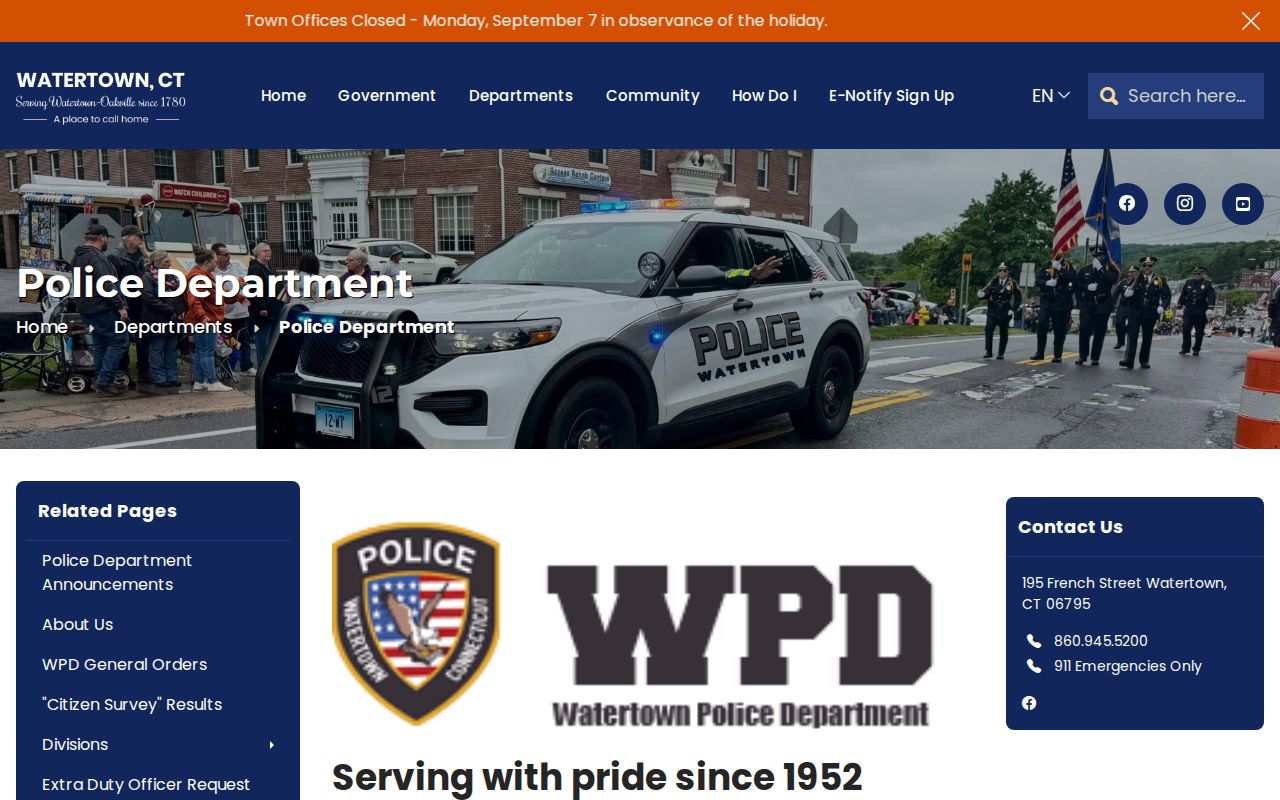
Prefer this source over any unofficial copy. Still, confirm the file opens and check its dates. Note: Save the source URL and access date whenever you cite a rotating log, because link targets and posted reporting periods can shift.
Read Litchfield Arrest Reports Carefully
Read a multi-day item as an arrest event, not present custody. A listed person may have posted bond. Or they may have been released on a promise. They may have gone to court or entered DOC. Article date, PDF date, arrest date, and custody-check time are four different timestamps.
- Confirm the publisher. Start on the municipal police, State Police, or Judicial Branch domain, not a copied search result.
- Define the window. Read the heading and file date to learn whether the item spans days, a week, or selected incidents.
- Separate event from publication. Note when the arrest occurred and when the agency or outlet posted it.
- Identify the record type. A log, press release, court docket, news story, and DOC result answer different questions.
- Follow the case. Use the court docket or clerk for later status and the original police agency for its report.
For a fresh event, the Arrested Today route zeroes in on immediate status and agency contact. It skips weekly publication patterns entirely.
Litchfield Arrest Report Fields
The unavailable Watertown PDF allows no claims about its exact columns. This inventory shows what to capture once an official blotter or agency report opens. It also flags limits. Those limits matter. They keep a multi-day event from being mistaken for a current custody roster.
| Field | How to interpret it |
|---|---|
| Name or case identifier | Use enough detail to distinguish a person without republishing unnecessary private data. |
| Arrest date and time | The event timestamp, which can predate the file or story publication. |
| Agency and location | Shows which office likely holds the police record; it does not create county custody. |
| Charge as booked | An initial charge that can later be amended, dismissed, nolled, or resolved. |
| Warrant or warrantless basis | Describes the event type, not whether a warrant remains active. |
| Bond or release condition | May describe the status at processing, not the person’s status today. |
| Court or docket details | Provide a route to the pending case and eventual disposition. |
| Photograph | A source-specific item; no complete Litchfield County mugshot channel was found. |
Connecticut's public record of arrest covers specified adult arrest information, with limits. Juvenile and erased matters stay out. So do some witness or victim details. Never fill a missing field from rumor or from a similarly named person's record.
Litchfield State Police Arrest Releases
Troop L and Troop B activity matters across the geographic county. Some Litchfield towns rely on State Police. Others use resident troopers. The State Police press-release page offers a dated, multi-day path for selected incidents. It adds agency statements and event context. It does not report every arrest. Nor does it work as a custody list.
Check the State Police release channel directly before leaning on news coverage.
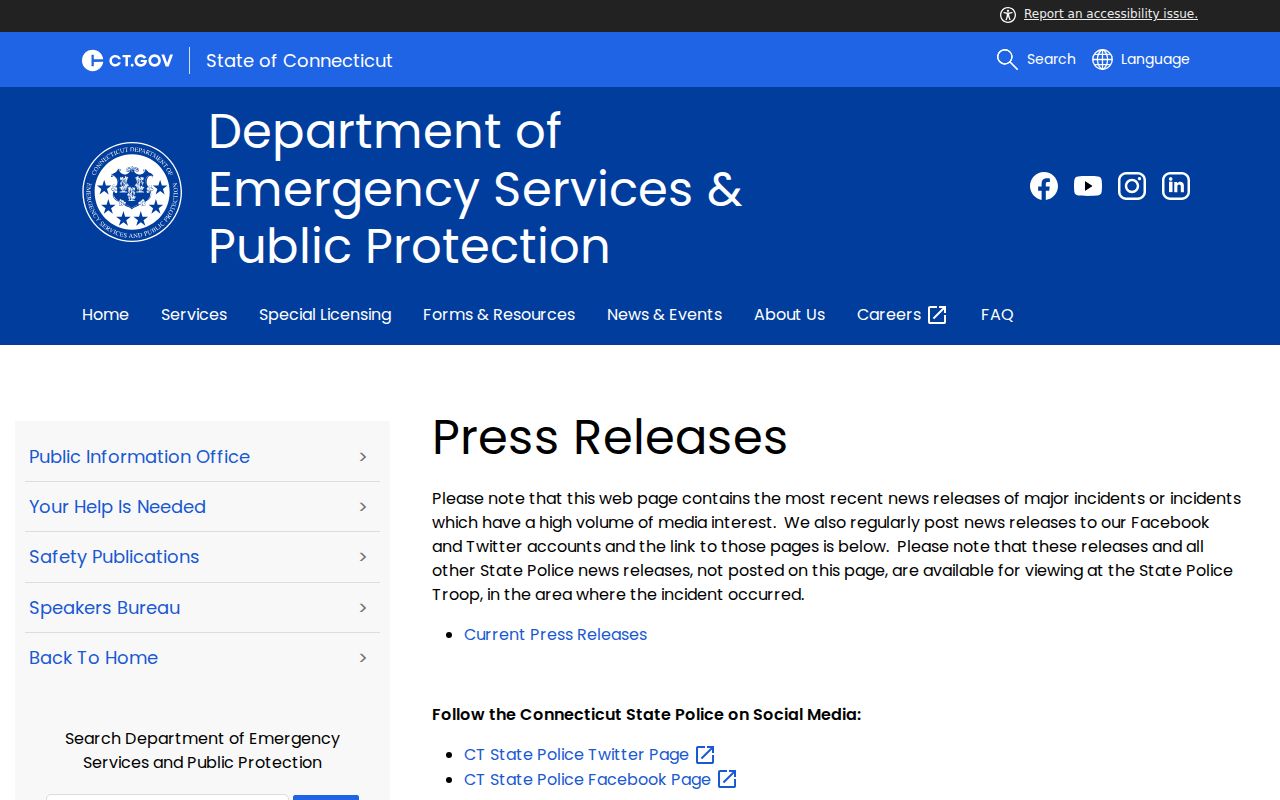
Tie every release to its agency and date. The absence of a release proves nothing about other arrests. Agencies pick the cases they publicize, often major or high-interest ones. A narrative may summarize probable cause or quote the agency. That selection shapes what the public sees. For the underlying State Police file, use the DESPP reports process. Do not treat a release as the complete report.
Local Litchfield Arrest News Patterns
Newspapers stretch the timeline wider than any blotter. They never match it for completeness, though. Register Citizen runs police stories from Torrington and northwest Connecticut, and it has posted old arrest-list articles too. News-Times handles selected New Milford matters. Regional public-safety coverage also comes from Litchfield County Dispatch, Newport Dispatch, Daily Voice, CTPost, CTInsider, and the Republican-American. Not one of them serves as a full Litchfield County booking feed. Start with official sources instead.
For a feel for the format, the Register Citizen’s historical Torrington arrest list shows a blotter-style news article listing arrest dates, charges, bond, and court information. It is dated reporting, not a current log. The article demonstrates how a news list can look official while still needing verification against agency and court records for anyone arrested in Litchfield County.
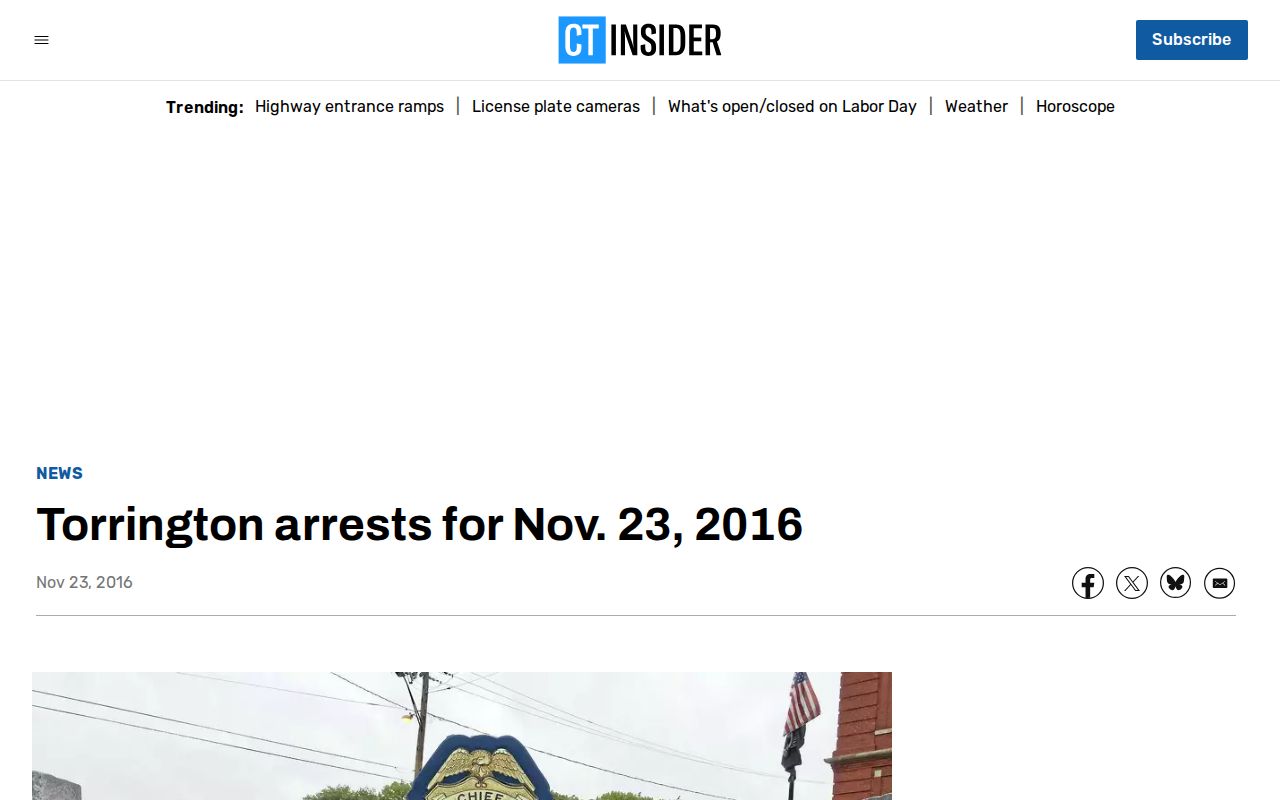
News images deserve equal caution. A patrol car, a station, or a contributed portrait is not automatically a booking photo. Keep the story's date and police attribution. Then look up the court outcome, since a later dismissal, nolle, acquittal, or conviction can change the legal context of the arrest.
Request Older Litchfield Arrest Records
Older Litchfield County arrest records sit with the office that made the arrest. No countywide archive holds them. Torrington's Records Division is the city's central repository. It accepts report requests under its disclosure rules. New Milford asks for prior written notice for incident and arrest reports. Those reports generally arrive in five to seven business days. Watertown routes arrest information to the Court Clerk. It does not release arrest reports through its Records Division.
State Police records run through a different channel. The DESPP records page explains the official request process and the GovQA route. A strong request names the person and gives an approximate event date. It also lists the arresting agency, town, and any incident or docket number. Ask for a defined record. No office holds a unified Litchfield County file. A request for "all county arrests" goes nowhere.
Connecticut's retention and erasure rules shape what still exists. An erased or sealed case can vanish from public lookup. Eligible identification material may be returned or destroyed under the law. Historical county-jail material lives in archives. Modern police, court, and DOC records each answer to a different custodian.
Note: A broken online link does not settle whether an agency retains the underlying record. Ask the official custodian about the specific event.
Verify Litchfield Arrest Outcomes
Court verification starts with the Judicial Branch criminal information page. That is the official source for pending public cases and dispositions. A docket confirms a case exists. The online data stop well short of the full court file, though. Police narratives and booking photos generally do not appear there. Criminal documents may require a clerk or Service Center request.
Custody adds another layer. Connecticut DOC can show state incarceration, including some people awaiting trial. But it is no county arrest archive. VINE handles qualifying custody and court notifications without replacing the police log. Federal or immigration custody sits in its own separate system.
A report can stay accurate as an arrest event long after release. That accuracy never makes its charge the final outcome. Keep the arrest, the custody status, and the disposition separated.