
How Litchfield County Recent Arrests Surface
Litchfield County recent arrests never land in one shared list. Connecticut wiped out county government in 1960. The Secretary of the State confirms there are no county seats. Every municipal department, resident trooper office, and State Police troop keeps its own arrest records instead. Troop L and Troop B file separately too. So start with the agency that made the arrest. From there, match the source to the case stage.
The Arrested Today guide covers the same-day search where no countywide feed exists. For dated local material and selected releases across several days, the wider Arrest Reports guide goes deeper.
| Window | What may appear | Limit |
|---|---|---|
| Same day | Police confirmation, selected release, or early docket | No complete county feed |
| Several days | Dated logs, State Police releases, court entries, news | Selective and sometimes delayed |
| DOC custody | State correctional status | Not a local booking log |
Booking details and court files sit with separate offices around Litchfield County. Arrest records follow the agency, not the map.
Who Was Arrested Last Night?
Last night's arrests start with whoever responded. A municipal department or a State Police troop handles the call, and its official news page is the first stop. Then check the Connecticut Judicial Branch. For custody or release alerts, use the VINE Arrest Check. A missing result proves little on its own, since the person may be out, the report may still be under review, the name may differ, or legal limits may apply. The official State Police troop directory helps route those questions.
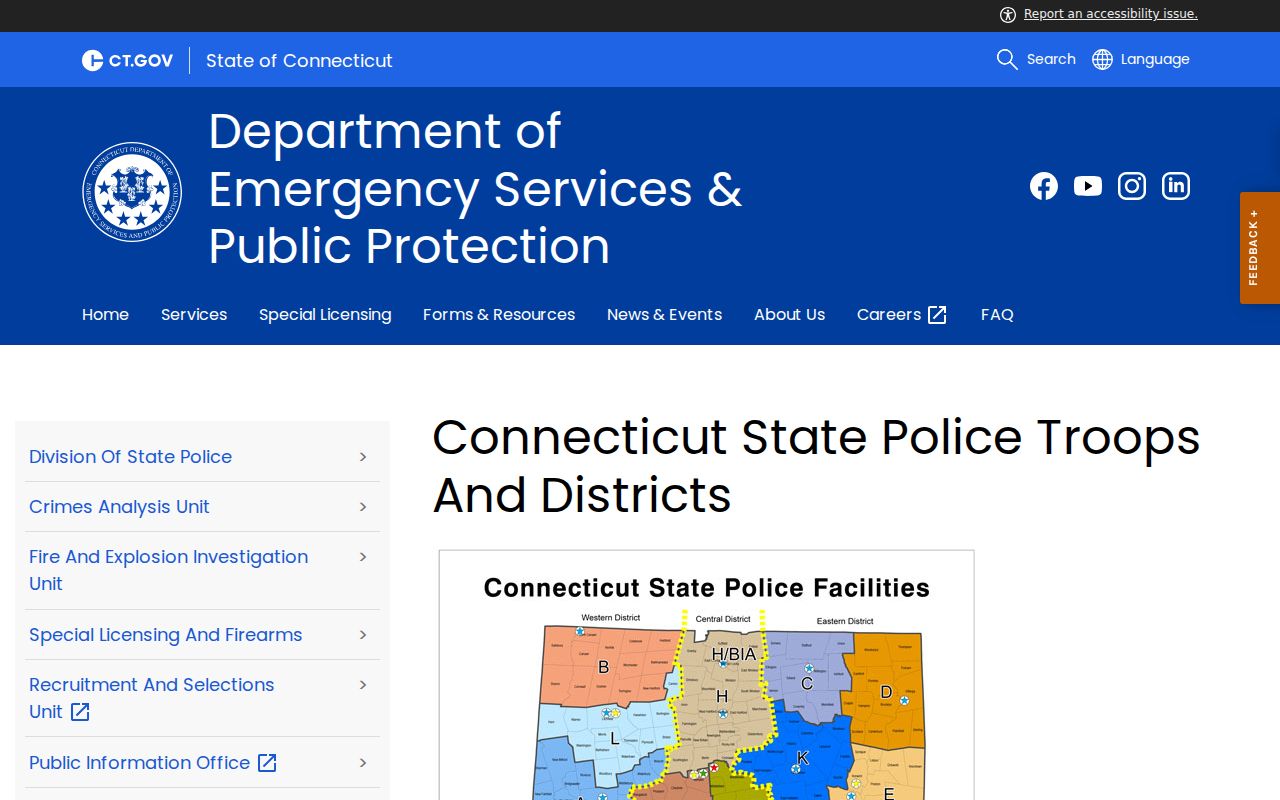
Troop L sits at 452A Bantam Road in Litchfield.
No Litchfield County Jail Roster
Litchfield County has no local jail roster to check. Connecticut folded its county facilities into one statewide DOC system years ago. The DOC facility list simply has no county jail here. The old Litchfield County Jail survives only in archives, since no one gets booked there now. The DOC locator works only for people held in that system, so a person arrested and quickly released may never show up at all. For official custody status, the Connecticut DOC inmate search is the place to look.
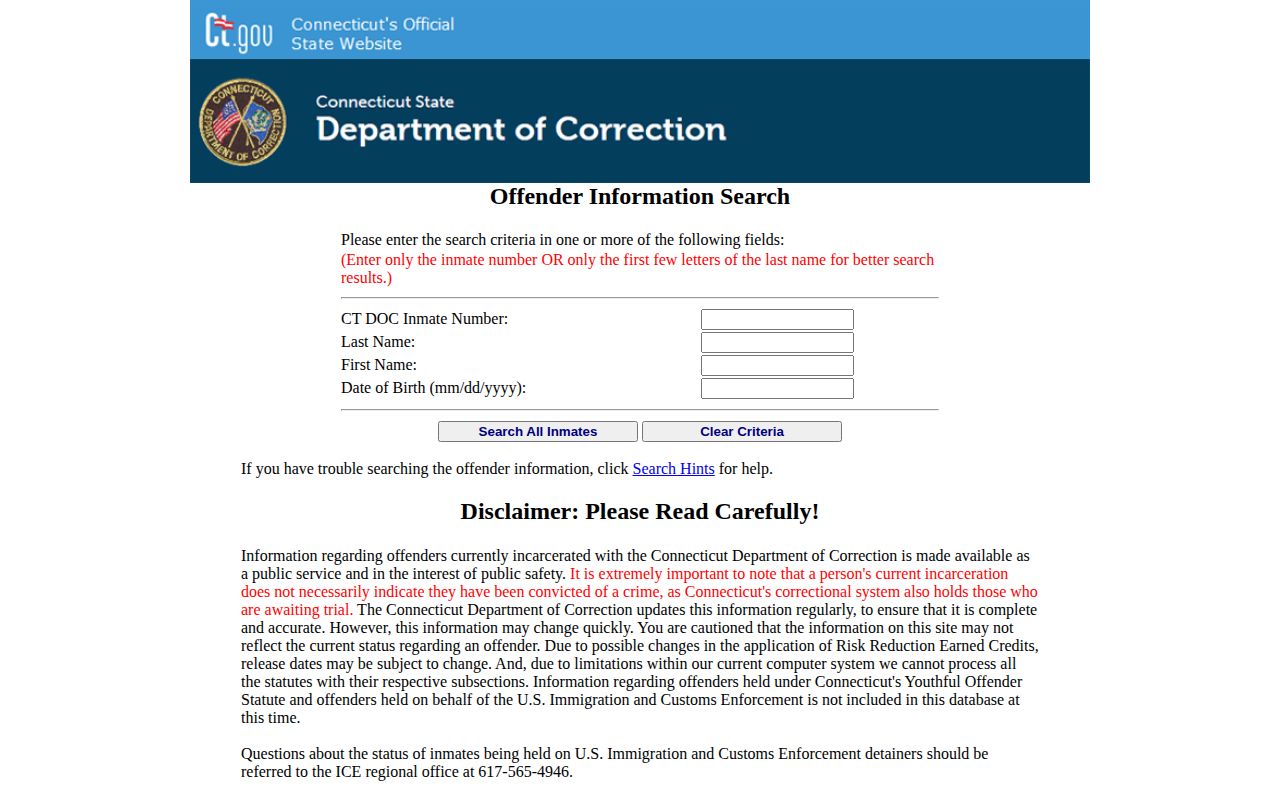
The blank form supports a status check without republishing a person’s record or photograph.
| Search field | Use |
|---|---|
| DOC inmate number | Best exact identifier when known |
| Last and first name | Use legal spelling and compare identifiers |
| Date of birth | Narrows similar names |
| Status and facility | Shows reported custody at retrieval time, not guilt |
Start with the inmate number if you have one. Otherwise search the last name, then narrow things down with a first name or birth date. The state system does not promise booking photos, county arrest data, or any set update schedule, so confirm anything important with DOC.
Where Litchfield County Arrests Get Published
No single channel carries every arrest. Official records come first, since they name the agency and the type of arrest record involved. Local news can add context on selected incidents. Commercial arrest sites are unofficial, and the big national ones list no current Litchfield section at all.
| Channel | Photo? | Best use |
|---|---|---|
| Municipal police records | Varies by law and request | Originating arrest or incident report |
| State Police and DESPP | Selected releases may | Troop L or Troop B events |
| Judicial Branch | No photo repository | Pending cases and dispositions |
| DOC locator | No reliable photo result documented | State correctional custody |
| VINE | No gallery | Confidential alerts |
| Local news | Sometimes, not always a mugshot | Selected context to verify |
Recent Arrests by Litchfield County City
City pages cover the three largest places: Torrington Recent Arrests, New Milford Recent Arrests, and Watertown Recent Arrests. Each police department sets its own request rules. Town lines do not settle who made an arrest, because State Police and resident troopers work across the county. So confirm the arresting agency first. One historical note: a 2021 judicial district fact sheet counted 1,045 Torrington Police criminal arrests in 2019, roughly 45 percent of the district total. That figure explains why Torrington stands out. It is not a live feed, though, and it does not make the department a county-wide authority.
Reading a Litchfield County Arrest Record
A police record marks the event itself. A docket tracks the court case that follows. A custody locator, meanwhile, tells you where a person sits in custody at a given moment, so each document answers a different question about the same Litchfield County arrest.
| Field | Meaning |
|---|---|
| Name and identifiers | Compare a birth date, middle initial, or agency number before accepting a match. |
| Arrest date, time, and place | The event details, not necessarily the publication time. |
| Agency and case number | The office holding the report and its retrieval key. |
| Charge and statute | The charge recorded at arrest, which may change in court. |
| Warrant basis | Whether warrant or warrantless disclosure rules apply. |
| Bond or release | A procedural status, not guilt. |
| Docket and court date | The bridge to pending and disposition records. |
| Custody or facility | The reported status at a point in time. |
| Photograph | An identification image if it exists and is lawfully released. |
Terms: booking starts the record. Arraignment opens court review, bond controls release, disposition sets the outcome, and erasure limits disclosure.
Litchfield County Mugshots and Arrest Photos
Litchfield County keeps no central photo archive. Municipal police sites promise no public galleries either. A booking photo, when one exists, sits with the local department or State Police that made the arrest. Connecticut's retention schedule treats mugshots as identification records, but keeping a photo never obliges an agency to post it online. Access also bends to investigative exemptions, juvenile rules, erasure, sealing, and privacy limits.
One request path does exist. New Milford's fee form lists color photo copies at $2 per page, the only local schedule that names them. That proves a channel, not a promise. Ask for the booking photograph as its own item and let the record holder weigh it. Torrington spells out several withholding limits. Watertown routes arrest information to the Court Clerk. The DOC locator gives no dependable photo result. Photos here stay case by case.
Request a Litchfield County Arrest Record
No county records unit exists. Each town sets its own rules. Fees cluster near 50 cents per page. Torrington posts exactly that, while New Milford adds $2 for color photo pages and quotes five to seven business days for reports. Watertown lists $0.50 with three-to-five-day service on incident and accident reports, but sends arrest information to the Court Clerk. State Police reports through DESPP cost $16 uncertified and $17 certified.
- Identify the municipal department, resident trooper, State Police troop, or other arresting agency.
- Collect the name, event date, town, incident number, and exact record type.
- Use the agency’s official form or DESPP GovQA route for State Police material.
- Ask separately for the arrest report, incident report, charging document, and identification photo.
- Expect lawful limits for juvenile, erased, sealed, medical, victim, witness, or active-investigation material.
- If material is withheld, ask for the legal basis and use the court clerk for court documents.
The official DESPP Reports and Records page explains state-police requests.
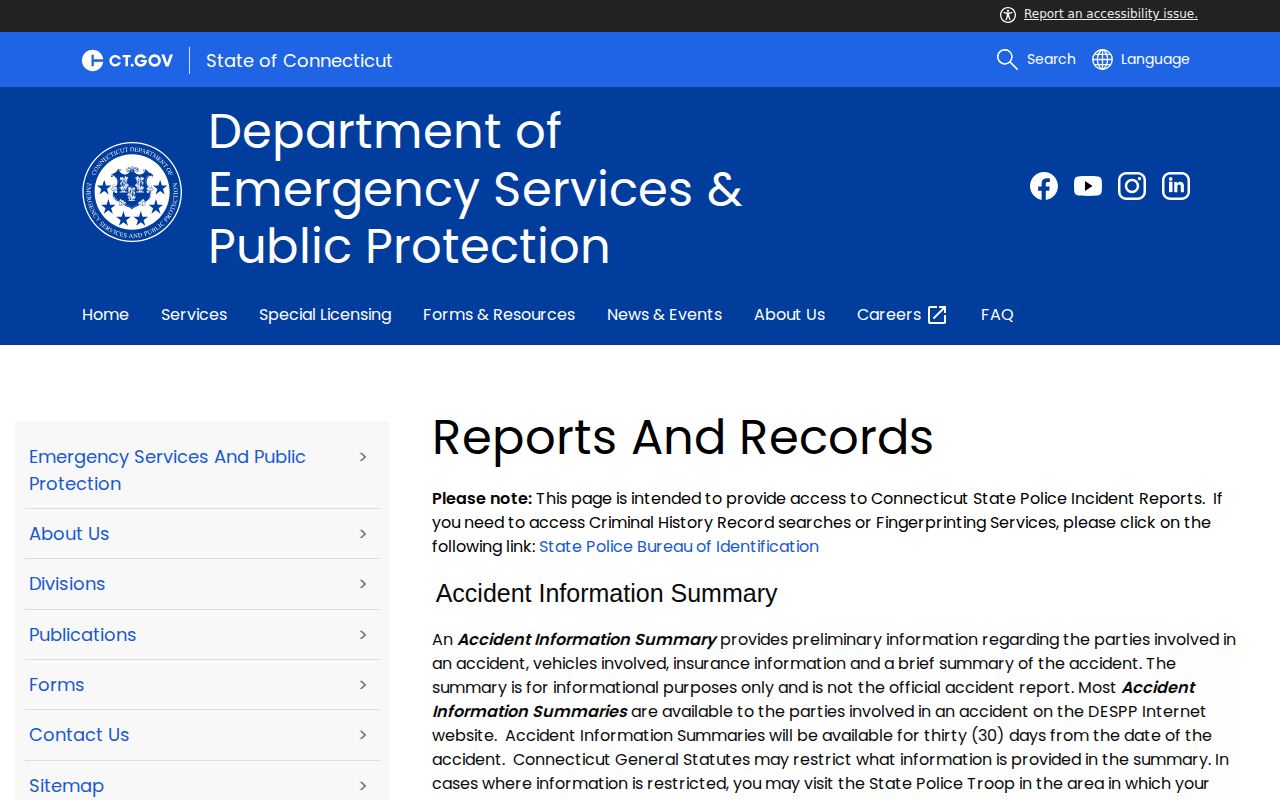
This state route is no substitute for a request to the municipal department that handled the arrest itself.
Connecticut Arrest Records and Erasure
Connecticut General Statutes §1-215 sets what counts as a public arrest record. It lists specific adult arrest details, with separate materials for warrant and warrantless arrests. But the statute keeps plenty off limits. Excluded material includes juvenile matters, erased or sealed records, victim and witness details, and information that could compromise enforcement. Fingerprints, photographs, and descriptions come back into play under Section 29-15. That section governs their return or destruction when an outcome qualifies. Erasure itself runs through Section 54-142a. It is triggered by events like dismissal, acquittal, or a qualifying nolle.
Public access and erasure law have to be read together. An old copy of a Litchfield arrest record is never the same as the current official one.
Corrections start with paperwork. Get a disposition or erasure document from the court first. Then send it to the source agency and the publisher. Include the exact URL and event details. A source fix and a search-engine update are two different steps. Connecticut sets no rule forcing every private mugshot publisher to delete a page on demand. Skip unknown intermediaries asking for payment, and never send more identity documents than required. The official criminal-record erasure chapter explains how later outcomes change lawful access to a record.
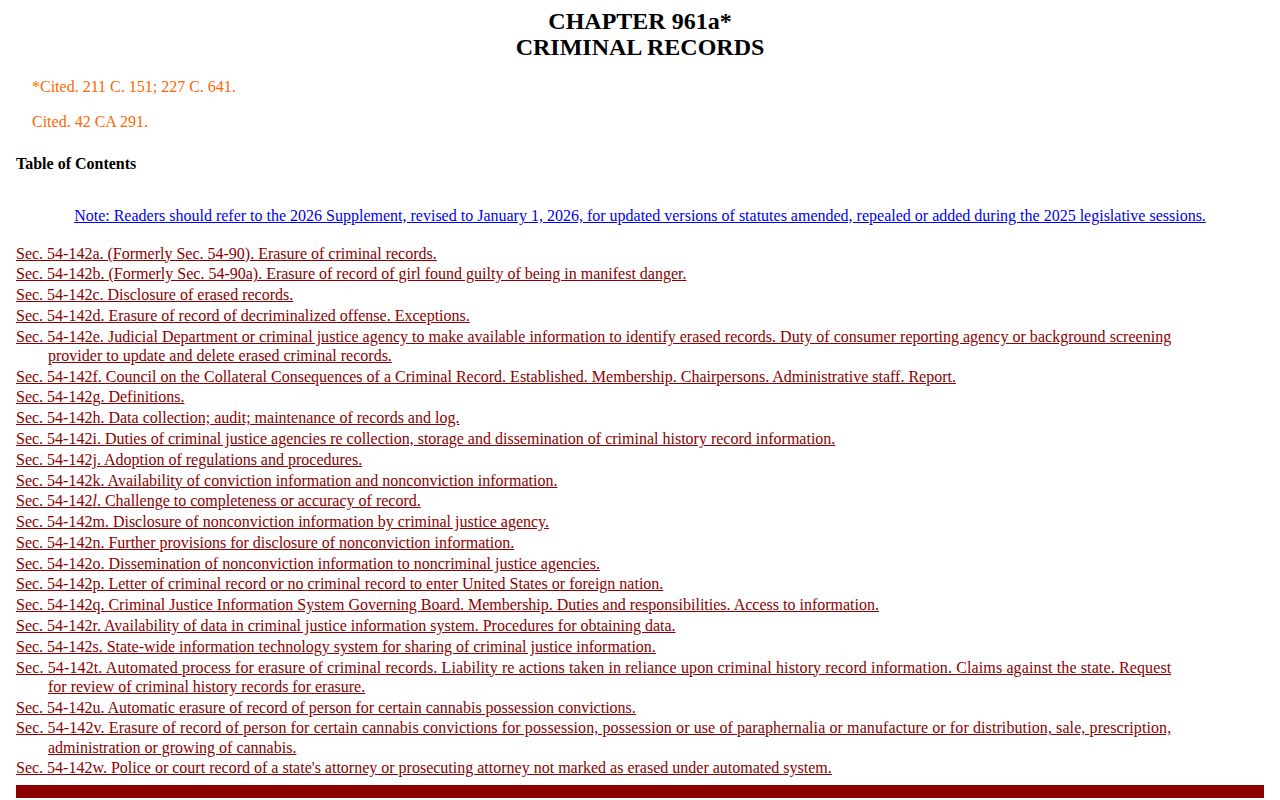
The statute supplies legal context only. A court or qualified counsel handles an individual case.
Warrants Without a County Most-Wanted List
Litchfield County has no sheriff most-wanted page. There is no county warrant search either. Warrant information sits with the issuing court and the agency that serves it. The Litchfield Judicial District's 2024 report lists aggregate warrant counts. But its tables follow different scopes, so the totals cannot tell you whether any particular warrant is still active. To confirm one, use Judicial Branch case routes, the court clerk, the responsible agency, or counsel. Torrington CrimeStoppers takes tips. It is not a warrant roster. Never confront someone you believe is wanted. Pass urgent information to police and call 911 for an immediate threat. The official Torrington CrimeStoppers page shows the proper safety route.
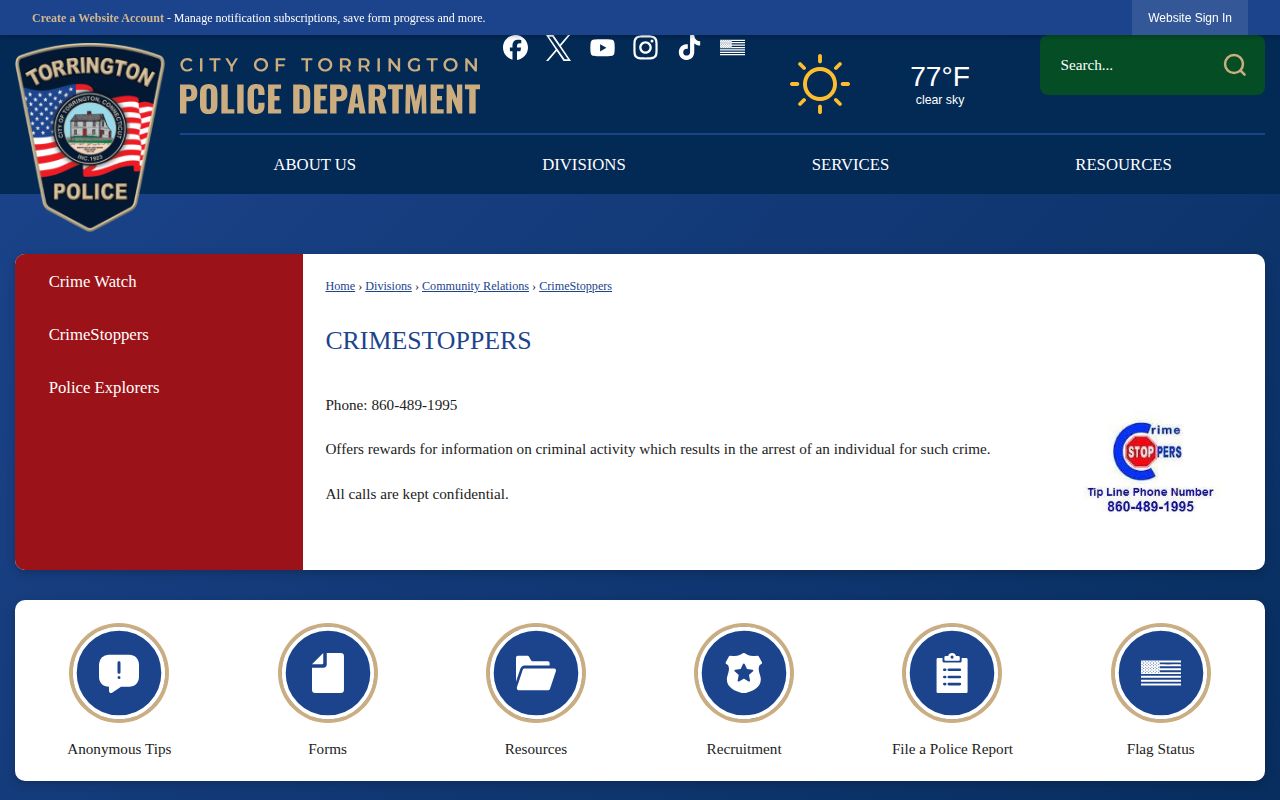
The capture supports safe reporting without displaying alleged wanted people or offering evasion advice.
After Arrest: Court Dates and Outcomes
The Judicial Branch offers pending searches by defendant or docket plus disposition-oriented tools. A docket can reveal a case, a charge, a continuance, or a later result. It will not hand you the full police report or booking photo. The online lookup is not the official court record either. Criminal documents come from the clerk or courthouse Service Center. Match the court and docket first. Then read the disposition. Dismissal, nolle, acquittal, diversion, and conviction each mean something different. Only authoritative court information supports those terms. Sealed, erased, and juvenile cases may stay out of view. A missing docket proves nothing, since entry can lag or restrictions may apply.
DOC, VINE, and Federal Custody
State custody runs through Connecticut DOC. It covers some pretrial and sentenced confinement, though a result alone does not prove conviction or a recent Litchfield arrest. VINE, formerly CT SAVIN, sends confidential custody and court notifications by phone, email, text, app, and TTY. Local arrests do not always appear instantly, and Torrington's VINE link shows local awareness rather than a complete city feed. Federal custody works differently. The BOP locator finds federal inmates incarcerated since 1982. Federal pretrial detainees may sit with the U.S. Marshals Service or a contract facility. ICE's locator needs an A-number plus country of birth, or an exact name with both birth details. Juveniles are not searchable. Federal records can lag or be withheld.
| Status | Likely source |
|---|---|
| Just arrested | Originating police agency, selected release, emerging court record |
| Released | Police and court record may remain despite no DOC result |
| Held by Connecticut | DOC locator and possibly VINE |
| Sentenced | DOC plus authoritative disposition |
| Federal or immigration | BOP, federal court, Marshals, or ICE |
Why No County Arrest Authority Exists
The missing Litchfield County roster is a matter of government structure, not an overlooked link. The Connecticut Secretary of the State's county guidance notes that county government was abolished effective October 1, 1960, and that Connecticut has no county seats. Counties remain geographic subdivisions only. They run no sheriff, jail, court administration, or unified booking system of the kind other states provide. That fact reshapes how any recent arrest should be traced. The arresting municipal department or State Police unit creates the initial record. The court later holds the docket and disclosable judicial documents. DOC reports qualifying state custody. VINE handles confidential notification. Federal agencies keep separate systems. Litchfield County Dispatch serves 22 towns as a regional communications hub for police, fire, and medical calls, but it is neither an arrest-record custodian nor a stand-in sheriff.
Police Arrest Record Versus Court Record
A police record and a court record are successive layers, not duplicates. The police report captures the arrest time, place, alleged offense, agency, and incident number. The docket tracks what happens next: a pending case, continuances, charge changes, and disposition. Neither replaces the other. The docket rarely includes the police narrative or booking photograph. The police record cannot settle the final judicial outcome. The Judicial Branch criminal information page links to a pending-defendant lookup. It also links to a pending-docket search and a separate conviction or disposition-oriented search. Official remote-justice guidance is clear on the split. Basic pending information may appear online. But criminal documents are not posted, and disclosable copies come from the clerk or a courthouse Service Center. The lookup is a public service, not the official court record.
Public Arrest Fields Have Boundaries
Connecticut General Statutes §1-215 opens a set list of adult arrest facts to the public. The opening takes effect the moment the arrest happens. The law spells out what belongs in that record. Name, race, address, date, time, place, and offense are the core fields. Warrant and warrantless arrests carry different extras. These include a warrant application, an affidavit, or an official arrest or incident report.
That opening has limits. It does not hand over a whole investigative file. Juvenile arrest records sit outside it, and so do erased records. Victim identifiers and witness material get separate treatment under the statute. So do medical details, investigative techniques, and anything that could prejudice a future enforcement action. When you share booking information from Litchfield County, stick to the minimum needed to identify the record. Avoid repeating a home address or stray personal details.
Town Arrest Request Fees Differ
No single countywide form or fee applies here. Each town sets its own rules. Torrington's Records Division serves as the central repository for police and accident reports, posting recordsdept@torringtonpd.org, 860-489-2020, and a $0.50 per-page price. Its form requests incident details. Some records can be withheld, it warns. New Milford takes a different path, listing nmpdrecords@newmilfordpolice.org, 860-355-3133 extension 2198, and 49 Poplar Street. Reports there generally take five to seven business days. Incident and arrest reports require prior written notice. Pages cost $0.50, and color photo pages run $2 each.
Watertown splits the difference, quoting three to five business days and $0.50 per page for incident and accident reports through its Records Division. Arrest reports are a different matter there; that division does not release them and points arrest questions to the Court Clerk instead. DESPP runs its own separate state route. An uncertified report costs $16, a certified one $17, and the search fee is nonrefundable. None of these prices guarantees a booking photograph or overrides an exemption.
Arrest Photo Removal and Correction
Connecticut has no pay-to-remove mugshot statute. No law automatically compels private publishers to delete a page. What exists is narrower. The public arrest-record rule governs access, §29-15 covers the return or destruction of fingerprints, photographs, and descriptions in eligible cases, and §54-142a handles criminal-record erasure. The municipal M-7 retention schedule tells agencies how long official identification records are kept and lawfully destroyed. It says nothing about online publication.
A dismissal, acquittal, qualifying nolle, sealing order, erasure, or corrected identity can change what stays accessible. Get authoritative documentation first. Then contact the source agency and any publisher with the exact URL and enough detail to pin down the record. Search engines cache pages separately, so a corrected source may linger in results. Nobody can promise universal or instant removal.
Historical Jail Records Are Not Arrest Bookings
History and current bookings rarely mix. The Litchfield Historical Society holds "Returns concerning jails for the County of Litchfield" covering 1877 through 1924. The Connecticut State Archives handles other genealogical research. Those papers describe an old county jail system. They cannot tell you who was arrested this week or who remains in custody today.
Modern records follow the post-1960 structure. Municipal police or DESPP hold current agency records, the Judicial Branch holds court material, DOC reports state custody, and VINE handles notifications. For a nineteenth-century jail question, a historical collection fits. The State Archives at 231 Capitol Avenue in Hartford can guide archival visits, but it is the wrong stop for this week's booking question.
Connecticut State Police Troop L Location and Directions
Public Record Search
Sponsored Results